Book before 20th August for £100 discount
GOLDEN TEMPLE

The Golden Temple – Where Humanity Eats Together
The Golden Temple, known as Sri Harmandir Sahib, is the holiest shrine in Sikhism and stands at the heart of Amritsar, a city founded in 1577 by Guru Ram Das Ji, the fourth Sikh Guru. The temple was later designed and completed by Guru Arjan Dev Ji, who built it at a level lower than the surrounding city to symbolise humility and equality. Its foundation stone was laid by the Sufi saint Hazrat Mian Mir, reflecting the Sikh commitment to interfaith harmony. In 1604, Guru Arjan Dev Ji installed the Adi Granth, the first version of the Sikh scriptures, inside the shrine, establishing it as the spiritual centre of the Sikh world.
In the heart of Amritsar stands a place unlike anywhere else in the world.
A place built not for kings, not for saints, but for everyone.
Sri Harmandir Sahib, the Golden Temple was created over 400 years ago with a simple, revolutionary idea:
All human beings are equal.
All are welcome.
No one leaves hungry.
Its four doors open in every direction, symbolising that the path to peace belongs to all of humanity. Step inside and you feel it immediately — the calm of the shimmering Sarovar, the sound of shabad, the warmth of thousands moving with one heartbeat.
But the true miracle happens behind the scenes. Every single day, more than 100,000 people sit together on the floor and share a meal
Rich or poor, traveller or local, every religion, every background all side by side.
This is Guru Ka Langar, the world’s largest free kitchen.
It runs entirely on seva — selfless service.
No salaries. No hierarchy. No barriers.
Volunteers roll rotis, stir giant cauldrons of dal, wash endless trays, and serve with a smile.
Children, elders, families, students, visitors from every corner of the world — all offering their hands, all becoming part of something bigger than themselves.
Why do they do it?
Because Sikhism teaches that sharing what you have is a form of prayer.
Because feeding someone is feeding humanity.
Because no one should ever feel alone or unseen.
At the Golden Temple, food is not just food.
It is dignity.
It is equality.
It is love in action.
When you walk through those doors, you don’t just visit a holy place
you step into a living example of what the world could be.
And for two nights in Amritsar, you will experience this spirit fully:
the peace of early morning darshan, the glow of the temple at night, the rhythm of seva, and the taste of a meal cooked with devotion.
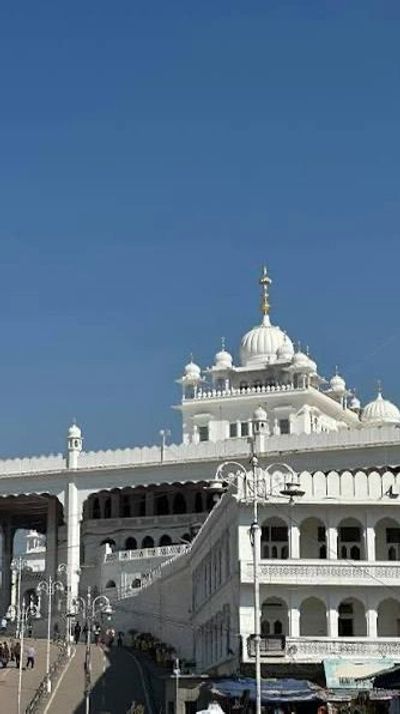
Anandpur Sahib
It’s known as the City of Bliss, is one of the most sacred and emotionally powerful places in Sikh history. Nestled at the edge of the Shivalik Hills, it was founded in 1665 by Guru Tegh Bahadur Ji, the ninth Sikh Guru, who chose this peaceful landscape as a sanctuary for meditation, teaching, and community life.
He named it Chakk Nanaki, after his mother, and the settlement soon grew into a centre of spiritual strength.
Years later, Anandpur Sahib became the home of Guru Gobind Singh Ji, the tenth Sikh Guru. Under his guidance, the city transformed into a vibrant hub of poetry, music, martial arts, and deep spiritual discipline.
It was here, on the historic day of Baisakhi in 1699, that Guru Gobind Singh Ji created the Khalsa, the community of saint‑soldiers who stand for courage, equality, and justice. This moment changed Sikh history forever, and Anandpur Sahib became one of the most important spiritual sites in the world.
The city is surrounded by ancient forts, open fields, and the quiet flow of the Sutlej River. It carries a rare energy — a blend of serenity and strength.
Every year, thousands gather here for Hola Mohalla, a festival started by Guru Gobind Singh Ji to celebrate bravery, skill, and community spirit through martial arts, horse riding, and traditional displays of courage.
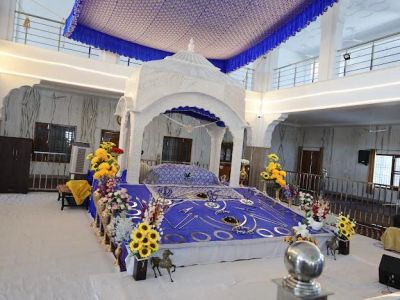
Excursions
1. Mau Sahib Gurdwara
In village of Mau Sahib, near Phagwara, stands a gurdwara with a story that has lived in the hearts of local families for generations.
This is the place where Guru Hargobind Sahib Ji, the sixth Sikh Guru, was married to Mata Nanaki Ji in the early 1600s.
The village still carries the energy of that sacred moment a beginning blessed with love, courage, and divine grace.
But Mau Sahib is remembered for more than the Guru’s wedding.
It is known for a legend passed down through elders a story that reveals the values of humility, strength, and unity across communities.
Part 2. In the same village:
GURDWARA SRI VIVAH ASTHAN MATA GANGA JI (MAU SAHIB)
Just outside the quiet village of Mau Sahib stands a gurdwara with a story that has lived in Sikh history for more than four centuries.
This is Gurdwara Sri Vivah Asthan Mata Ganga Ji, the sacred place where Guru Arjan Dev Ji, the fifth Sikh Guru, was married to Mata Ganga Ji on 22 Harh 1589.
The marriage was performed by the revered Baba Budha Ji, and the entire village gathered to welcome the Guru’s wedding party with joy and devotion.
Before entering the village, the elders presented a traditional challenge to the groom:
“A bridegroom entering Mau Sahib must uproot a wooden peg from the ground while sitting on horseback.”
Guru Arjan Dev Ji accepted the challenge with calm grace.
With a single movement of his spear, he lifted the peg from the earth, and the village erupted in celebration.
.jpeg/:/rs=w:400,cg:true,m)
GURDWARA PANJVI PATSHAHI – BILGA
Bilga is a historic village located near Phagwara, and it holds a special place in Sikh history because Guru Arjan Dev Ji stayed here on his way to Mau Sahib for his wedding to Mata Ganga Ji in June–July 1589.
At that time, Bilga was a tiny settlement of just a few mud huts, but the villagers welcomed the Guru and his wedding party with deep devotion and humility.
Guru Arjan Dev Ji stayed in Bilga for two days, bathing in the village well and resting with his companions, including Baba Budha Ji, Bhai Gurdas Ji, Mian Mir Ji, and other respected Sikhs.
The villagers served the Guru with such love that he blessed them and left behind several of his personal belongings as sacred gifts.
These items including a chola (robe), pyjama, scarf, handkerchief, shawl, purse, simrana mala, and a small brass‑fitted stool — were preserved by the sangat for generations.
Today, these relics are displayed with great respect inside Gurdwara Panjvi Patshahi, making Bilga one of the few villages in Punjab that holds original physical belongings of a Sikh Guru.
The gurdwara stands on raised ground and includes:
• a divan hall
• the sanctum where Sri Guru Granth Sahib Ji is seated
• the preserved well used by Guru Arjan Dev Ji
• the relics displayed safely in glass cases
Every year, from 18 to 20 Harh (early July), a large fair is held in Bilga to commemorate the Guru’s visit.
On the final day, the Guru’s clothes are displayed for the sangat a moment of deep spiritual significance.
For retreat guests, visiting Bilga offers a rare experience:
a chance to stand where Guru Arjan Dev Ji once stood, to see the clothes he wore, and to feel the living history of a village that has protected these treasures for more than four centuries.
RELIGIOUS AND CULTURAL EXCURTIONS
.jpeg/:/rs=w:400,cg:true,m)
Gurdwara Sahib- daily morning routine
Every day, you will also have the chance to visit a peaceful local gurdwara, where you can sit directly in front of the sacred Guru Granth Sahib and experience the calm rhythm of Sikh spiritual life.
These small village gurdwaras offer a rare level of closeness and authenticity — far away from crowds, you can listen to the granthi recite shabad, ask questions, and receive gentle explanations in English.
Guests are welcome to join in daily practice if they wish, whether that means sitting quietly in reflection, listening to kirtan, or simply absorbing the atmosphere of devotion.
This is a unique opportunity to experience Sikh spirituality in its most natural form, in a setting where you are not just a visitor but a welcomed part of the sangat.
.jpeg/:/cr=t:0%25,l:0%25,w:100%25,h:100%25/rs=w:400,cg:true)
Shaheed‑e‑Aazam Sardar Bhagat Singh Museum, Khatkar Kalan (Nawanshahr)
Step into the heart of Punjab’s history with a meaningful one‑day excursion to the Shaheed‑e‑Aazam Sardar Bhagat Singh Museum in Khatkar Kalan, located in the district of Nawanshahr (Shaheed Bhagat Singh Nagar).
This museum stands as a powerful tribute to one of India’s most iconic freedom fighters and offers visitors a rare opportunity to connect with the courage, vision, and sacrifice that shaped the nation’s independence movement.
The museum is built beside the ancestral home of Sardar Bhagat Singh, carefully preserved to reflect the environment in which he grew up.
Inside, guests can explore an inspiring collection of personal belongings, handwritten letters, family photographs, and historical documents that reveal the depth of his revolutionary spirit.
Each room tells a story not only of Bhagat Singh’s bravery, but of the values of justice, equality, and resilience that continue to influence generations.
This excursion offers a powerful shift in energy: from the spiritual calm of gurdwaras and village heritage to the bold, awakening history of Punjab’s freedom struggle. It is a chance for guests to understand the roots of Punjabi
CULTURAL EXCURTIONS

Excursions
Your journey begins settling into our peaceful wellbeing complex, where you will spend the first four days grounding yourself in daily discipline, Kundalini inspired movement, morning Nitnem at the Gurdwara, organic meals, mindful walks, and evening healing sessions.
These first days prepare your mind, body, and spirit for the sacred excursions ahead.
Once your daily practice has settled into your rhythm, we begin travelling to some of the most important Gurdwaras and historical sites in Punjab. Each visit is guided with respect, storytelling, and spiritual insight, allowing you to connect deeply with the legacy of the Gurus and the history of the land.
Gurdwara Visits Include:
- Gurdwara Guru Arjun Dev Ji, Mai Sahib
- Baba Sang Gurdwara, Sang Dhesian
- Gurdwara Guru Arjan Dev Ji, Bilga
These sacred spaces offer a chance to sit in sangat, listen to kirtan, reflect on the lives of the Gurus, and understand the spiritual strength that shaped Sikh history.
Historical Excursions Include:
- Maharaja Ranjit Singh Fort, Phillaur – a powerful reminder of Sikh sovereignty and leadership
- Sarai Noor Mahal – a stunning architectural and cultural landmark
Each location is chosen to give you a deeper understanding of Sikh heritage, courage, and spiritual resilience.
Golden Temple Experience – Blessing
At the end of the retreat, once you have learned the daily practices and connected with the teachings, you will travel to Sri Harmandir Sahib (The Golden Temple), Amritsar, for a two-night stay.
This is the heart of the Sikh world, and your time here will include:
- A guided tour of the complex
- Listening to live kirtan inside the Darbar Sahib
- Participating in Langar Seva
- Cooking in the world’s largest free kitchen
- Serving thousands of visitors each day
- Early morning Amrit Vela experience at the Golden Temple
This final chapter of the retreat is often described as life‑changing. Standing in the presence of the Guru, serving others, and witnessing the power of community will leave you feeling humbled, uplifted, and spiritually renewed.
Durgiana Temple – Amritsar
Durgiana Temple A significant Hindu temple dedicated to Goddess Durga and Lord Vishnu. Known for its striking architecture and serene setting, it offers insight into Hindu devotional rituals such as aarti, prayer, and offerings.
Jallianwala Bagh – Amritsar
Jallianwala Bagh A historic memorial site that marks an important moment in India’s independence history. The site provides a powerful space for reflection on resilience, sacrifice, and national identity.
Included Cultural Learning Experiences
- Participation in or observation of aarti ceremonies
- Experience of langar (community meals) promoting equality and service
- Introduction to daily spiritual practices and mindfulness traditions
- Engagement with local community life and interfaith culture
- Guided reflection on how spirituality connects to wellbeing and lifestyle
This retreat is more than a journey; it is a return to your roots, your spirit, and your inner truth.